
Products
AGI Designer
Imagine: being able to design a dynamic, naturalistic AI agent in minutes...
Building on our existing modular framework, we propose a powerful new tool for designing naturalistic AI. Our product will allow users to build their own AI agents through custom drag-and-drop design with our existing circuit modules:
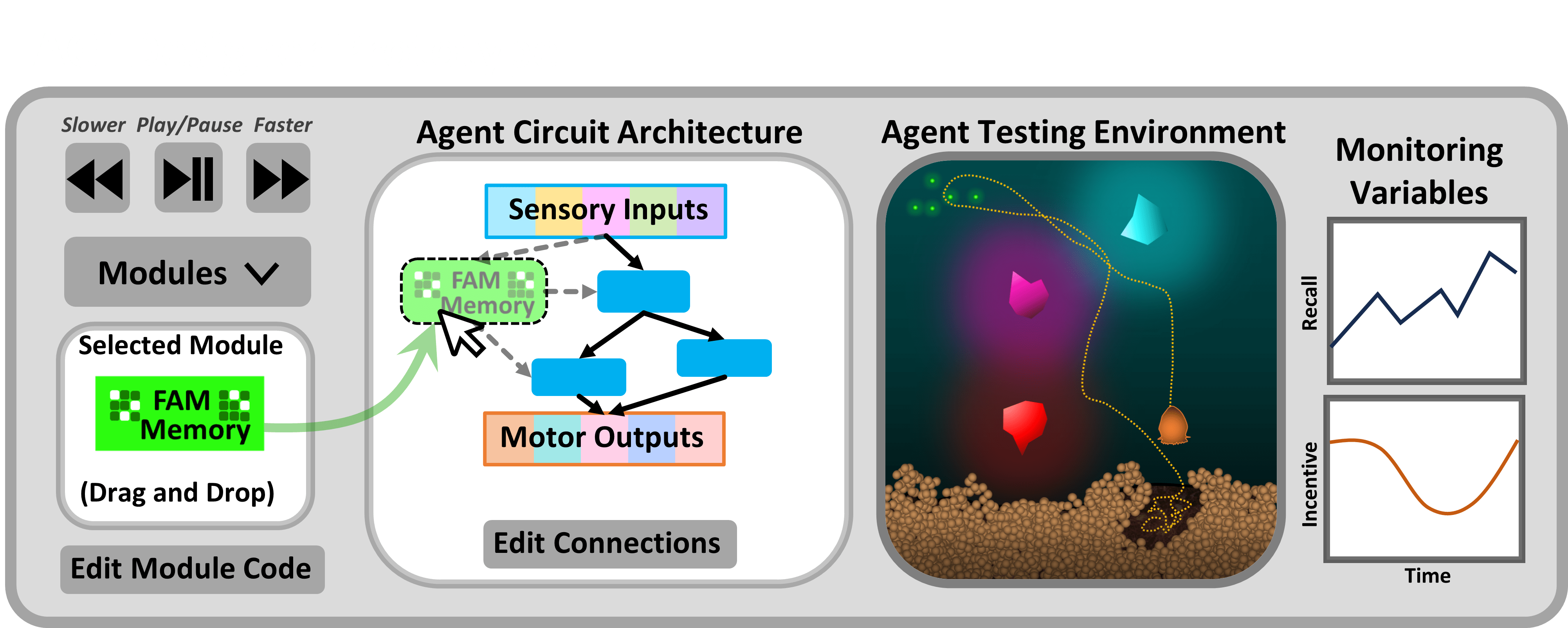
Use Cases:
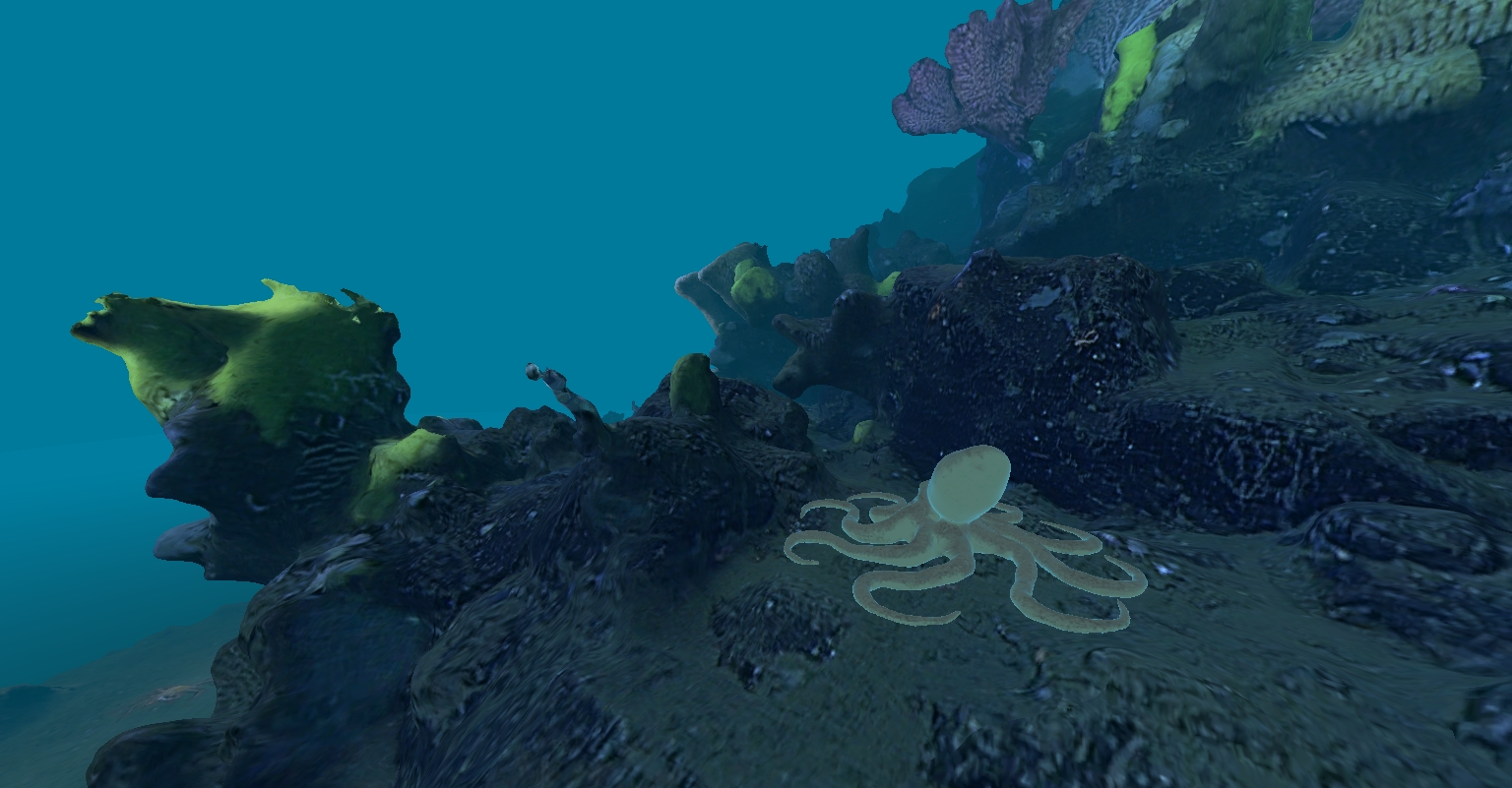
Video Game Character AI
In video game development, AGI Designer will provide a framework for rapidly designing adaptive and naturalistic game AI, using simple biologically-inspired circuitry that generates more efficient and dynamic behavior than the traditionally-used finite state machines and behavior trees.
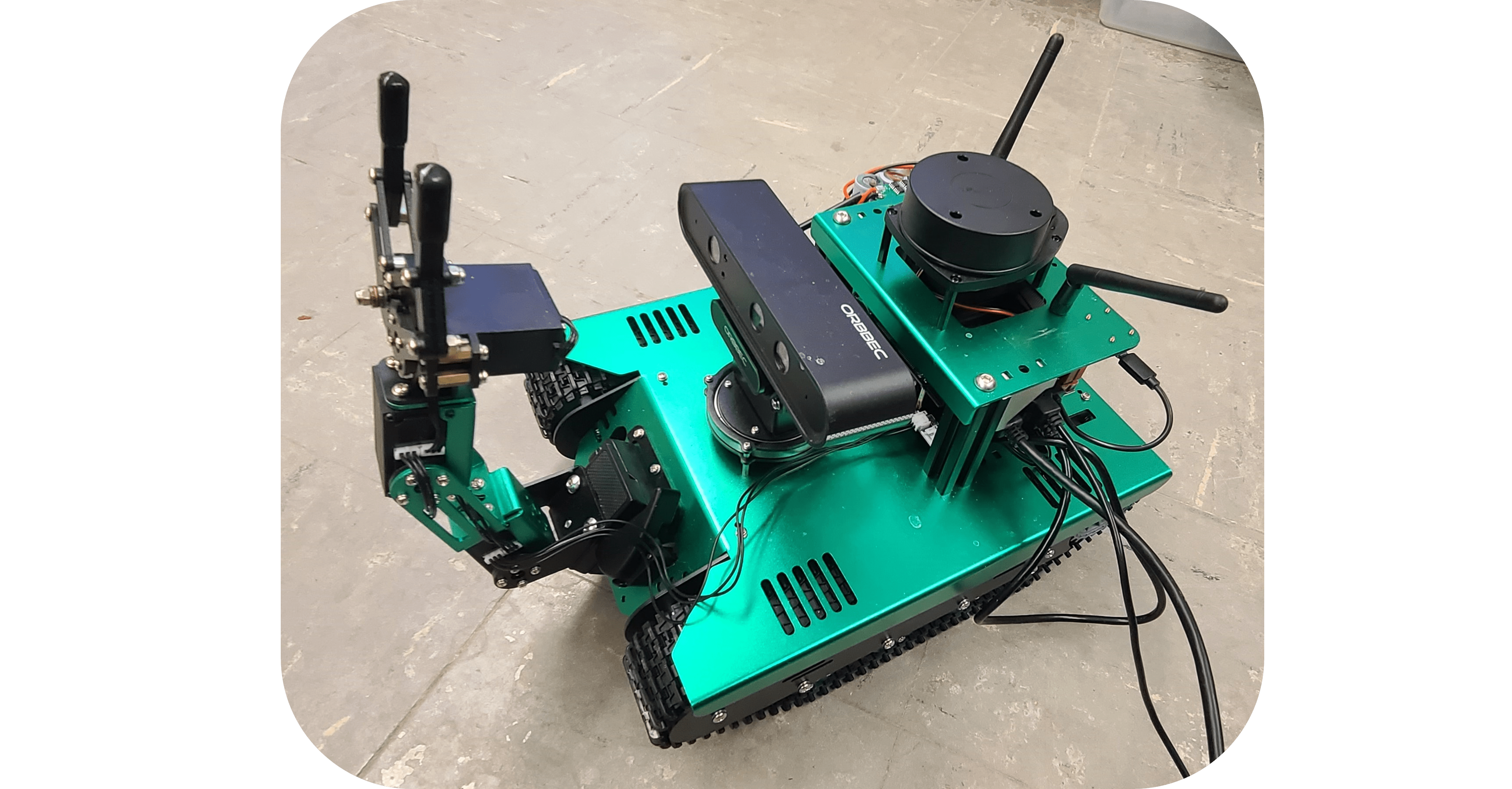
Robotics
In robotics, AGI Designer will be valuable in constructing algorithms for small compact robots with “big brains”. The Designer's enhanced modules for generalized cognitive mapping would enable the agent to learn both spatial navigation and motor tasks with sparse sensory input in real-time.
Other AI Model Integrations
AGI Designer agents can be custom-designed for integration with other AI, such as large language models (LLMs). The AGI Designer architecture's basis in core circuitry of foraging decision is well-suited for constructing adaptive, self-motivated web crawler agents that can efficiently forage for LLM training data.
H i s t o r y
ASIMOV-FAM
Ekaterina D. Gribkova & Rhanor Gillette
We developed ASIMOV (short for "Algorithm of Selectivity by Incentive, Motivation and Optimized Valuation") as a biologically inspired AI. ASIMOV is an agent-based simulation built on the neuronal circuitry for cost-benefit decision of an invertebrate model system (see Cyberslug below) through simple stepwise additions for complex function with computationally simple algorithms. ASIMOV provides a fundamental framework for developing artificial animal behavior and cognition through step-wise modifications.
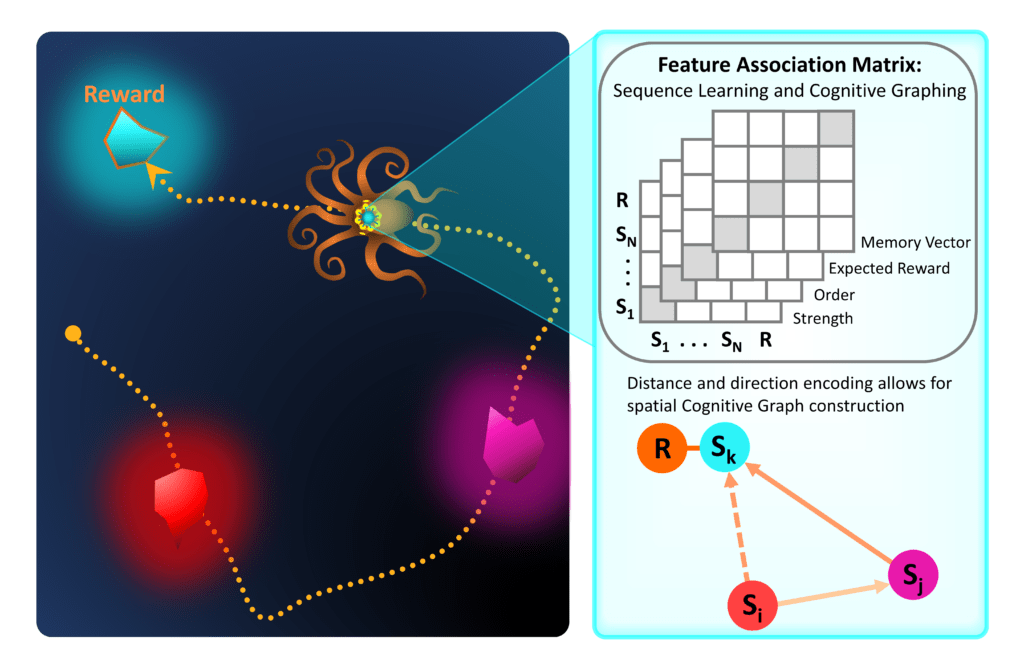
The ASIMOV-FAM agent maps its environment and autonomously creates shortcuts using a novel memory module.
Learn More
Cyberslug
Jeffrey W. Brown, Derek Caetano-Anollés, Marianne Catanho, Ekaterina Gribkova, Nathaniel Ryckman, Kun Tian, Mikhail Voloshin & Rhanor Gillette
Contemporary artificial intelligence lacks the attributes of natural intelligence, in particular the abilities to relate information affectively. Here we show in simulation the function of a basic neuronal circuit for cost-benefit decision, derived from studies of a predatory generalist, the sea-slug Pleurobranchaea californica, and based on affective integration of information. Its simplicity may reflect distant ancestral qualities on which complexities in economic, cognitive, and social behaviors were built. The simulation validates experimental data and provides a basic module for expansion of behavioral complexity.
We are presently working to add enhanced cognitive abilities and social behavior to the Cyberslug framework in simple piecemeal fashion following an evolutionarily plausible course, as with our current expansion, ASIMOV-FAM.
.jpg)
Artwork by Mikhail Voloshin